الأحد، 12 أبريل 2020

ترقبوا مقال هام عن #كورونا #COVID-19


#فيروس#كورونا
هذا الفيروس الذي اوقف دوران عجلة العالم بكل ما فيها من نمو و تطور و ازدهار 
قد اوقفها بالكامل 
توقفت حركات كل المحركات في العالم الا عجلة البحث العلمي الذي كاد ان يكون ذكرى هو الاخر في ظل دوران العالم الذي لا يرحم و اذكر بالخصوص هنا البحث العلمي في مجال الطب و البيئة 
اتى هذا الفيروس الذي لا يمكن رؤيته بالعين المجردة و لا بالمجهر التقليدي ايضا و انما بالمجهر الالكتروني ليقول لكل المحركات التي تسبب التلوث في الارض 
كفى .....كفاكي عبثا و تخريبا في الارض بدعوى النمو الاقتصادي 
كفاكي افسادا في الكون الذي خلقه الله للانسان كي يعمره لا ليفسده
فمن حق الارض ان تستريح من عبثك ايها الانسان كفى و كفى ما تفعل 
نرقبوا المقال و اتمى ان يلقى اعجابكم

#Corona Virus
This virus, which stopped the wheel of the world with all its growth, development and prosperity
Stop it completely
The movements of all motors in the world stopped except the wheel of scientific research, which almost became a memory, too, in light of the inexorable world rotation. I mention in particular here scientific research in the field of medicine and the environment
This virus, which cannot be seen with the naked eye or the conventional microscope either, but rather the electron microscope came to tell all the engines that cause pollution in the ground
Enough ..... enough in vain and sabotage on the ground, claiming economic growth
Enough corruption in the universe that God created for man to live, not to spoil this universe
It is the right of the earth to rest from your absurdity, O man, stop and stop what you do
Watch the article and hope you like it

الجمعة، 9 فبراير 2018

Celebrating Valentine's Day

Question:

Celebrating Valentine's Day has become widespread amongst young ladies lately. This is a Christian festival, during which rod clothes shoes are wore and red roses are exchanged. Kindly clarify the ruling on celebrating such festivals.

Fatwa:

All perfect praise be to Allah, The Lord of the Worlds. I testify that there is none worthy of worship except Allah, and that Muhammad  sallallaahu  `alayhi  wa  sallam ( may  Allah exalt his mention ) is His Slave and Messenger.

Celebrating Valentine's Day is prohibited for the following reasons:
1.    It is an innovated festival that has no grounds in Islam, which makes it go under the ruling of the following narration. `Aa'ishah, may Allah be pleased with her, reported that the Prophet   sallallaahu  `alayhi  wa  sallam ( may  Allah exalt his mention ) said: "He who resembles a group of people will be with them (in the Hereafter)" . [Ahmad and others].
2.    It invites to lust and encourages immorality, listening to music and intermixing between men and women, all of which is prohibited.
3.    It includes imitating non Muslims, and the  Prophet   sallallaahu  `alayhi  wa  sallam ( may  Allah exalt his mention ) said: "Anyone who introduces in our matter (Islam) something which does not belong to it, will be rejected". [Al-Bukhari and Muslim].
4.    It reflects glorification and acceptance of their religion, which contradicts the command of Allah not to accept other than Islam as a religion.
5.    It busies the heart with useless and attaches it to harmful matters, all of which opposes the practice of our Salaf (righteous predecessors)  may  Allah  have  mercy  upon  them.

Therefore, it is not permissible to practice anything on that this festival day that reflects imitating those who practice it, whether it is regarding to ones food, drinks, clothes, gift exchange or anything else.
Finally, a Musim must have pride in his religion and should not be naïve and follow everything he sees around him.
Allah Knows best.

The Quran and Community

Virtually every human language has a word for ‘community.’ How could it be otherwise when community is of the core essence of the human experience? We are creatures of community. To live as part of one fulfills the most natural inclination to society that thrives in every one of us. This is the reason that the notion of community—simple, innate, intuitively understood—never did call for much discussion. It was that fundamental.


Not so since the cesarean birth of the modern, when man was untimely ripped from his natural social womb and delivered disoriented into moral distortion, unmanageable materialism, greed, injustice and arrogance. This has steadily led us to a gross reverence of individualism and a neartotal disregard for the common weal of man.


The result has been much more than the mere loss of an abstract communal sense among us (and its attendant avalanche of ugly ills). We have been forced to endure the degradation and, in some cases, the complete destruction, of the most essential humanizing component in life: The family.


Still, 'community' remains in wide use among all people. We invoke it at every turn because it is deep in our Fitrah (the natural predisposition upon which Allah Almighty created mankind), our inherent tendency toward virtue. For community alone holds all earthly hope for our shared happiness and brotherhood.


It is a strange thing that something as ancient as community—a given for the pre-moderns, despite their technological and informational "deficiencies"—has become a cause of primary challenge in our time and at what price?


This points up another important note on community: The lack of proper understanding of what community means. This is the chief reason it isso hard today to establish and maintain one.


In this, there is, indeed, a sign for our confused times. It exposes a certain unawareness among our Muslim leadership, which has shown itself at a loss for identifying the wellsprings of community, though the Quran is utterly unambiguous about this.


The first thing about community in the Quran that rivets you is its massive emphasis. Aside from the topics of faith and Tawheed, Ummah (in its various forms) is the most widely mentioned concept in it. It establishes community as the standard by which we are to understand and reflect upon man. Allah Almighty Says (what means): "O mankind, indeed We have created you from a male and a female and made you peoples and tribes that you may know one another. Indeed, the most noble of you in the sight of Allah is the most righteous of you. Indeed, Allah is Knowing and Acquainted." [Quran 49:13]


This is the most essential form of community intended by God Almighty for man—a single fellowship commanded to come together for the common good on the basis of monotheism. The Quran grants that material means may allow man gain in worldly matters. Yet only one criterion (God's reverence and worship—which the Quran refers to as Taqwa) forms the basis upon which man is to be judged. This makes Taqwa, reverencing only One God, the sole guidance worth living by. This is no mere abstraction. So let there be no ambiguity about it. Taqwa is entirely concrete.


If people find it difficult to grasp the rope of God Almighty by which Taqwais represented, let's be frank, it is wholly due to one failing: The fact that establishing a community based on exclusive reverence for God Almighty alone means that some men cannot be lords over others. All are equal and must, therefore, render unto others what they expect from them in return. That is the reason why Taqwa is the only logical criterion of a just community. It is a direct measure of our willingness to believe in Allah The Most High and obey His commands.


Strikingly, the Quran tells us that the most important ingredient in establishing a community depends not on space, time, matter, or any other "chance" trait or relationship in the world. It is a bond of the human heart. The naked truth is no amount of human will or earthly means can bring it about. It is purely and explicitly an act of Divine Grace. Allah Says (what means): "…And remember the favor of Allah upon you – when you were enemies and He brought your hearts together and you became, by His favor, brothers…" [Quran 3:103] Thus, it is Allah, and Allah alone, who brings the hearts of a community together and binds them.


We need to appreciate that this is not an act of pure destiny but also a function of whether a people consciously chooses to internalize and live by the sterling standard of Taqwa, namely this: God is God. Man is Man. The First is to be worshiped. The latter is His servant, serving all others at His divine pleasure.

Why #they found Islam irresistible?


There is compelling anecdotal evidence of a surge in reversions to Islam since September 11, not just in Britain, but across Europe and America. One Dutch Islamic center claims a tenfold increase, while the New Muslims Project, based in Leicester and run by a former Irish Roman Catholic housewife, reports a "steady stream" of new reverts.

This fits a pattern set by recent history. Similar surges followed the outbreak of the Gulf War, the Bosnian conflict and the declaration of a fatwa against Salman Rushdie. Some of the newcomers doubtless do not share David Blunkett's enthusiasm for overt espousals of Britishness. Some of them - by all accounts a rapidly expanding minority - are white, more educated and more middle-class than the Home Secretary himself.
These are some of Islam's more surprising reverts. They have chosen their new creed over the world's other great religions having had the privilege of choice, often confounding their own and their families' prejudices in the process. They are highly articulate and tolerant to a degree. They're People Like Us, only they're not. They're Muslims. They pray five times a day, fast during Ramadan and hope to go to Makkah before they die. They answer their mobiles with "as-salaamu ‘alaykum".
They are people like Elizabeth L. (who asked for her name to be changed because she has not told her parents yet). Six months ago she - a graduate in political science, the daughter of affluent white British parents, an opponent of terrorism in all its forms - climbed Mount Sinai at night to watch the desert sunrise from its summit.
"It was the stillest, most peaceful place I've ever been," she says. "I could hear my feelings come up from within me, and in one surreal moment it all seemed to come together."
On Friday 4 January 2002, at 4.45pm, she went to Regent's Park Mosque in Central London and reverted to Islam. It wasn't hard. She witnessed by two Muslim men and nine other friends squeezed into the Imam's office, she pronounced, in Arabic learnt from a tape the night before, the words she will repeat like a mantra five times a day for the rest of her life: "There is no god but Allah and Muhammad is His Messenger." Afterwards there was a modest celebration at Al-Dar on the Edgware Road. Elizabeth and her well-wishers sipped mint tea.
Why has she done this? "I know it sounds clichéd, but Allah came knocking at my heart. That's really how it feels. In many ways it is beyond articulating, rather like falling in love."
It was, in other words, intensely personal. As she read the Quran and prepared for her reversion, the September attacks came and went and failed to derail her spiritual journey, despite their proven link to an Islamist terror network. In as far as they featured in her thinking, they even elicited some sympathy. All terrorism is cowardly, she says. "But I can see why people get fed up with the West. Capitalism is enormously oppressive."
Elizabeth is not a freak, and she is certainly not alone. There are many others, like Lucy Bushill-Matthews, a 30-year-old graduate of Newnham College, Cambridge, who flirted with Islam as a student in order to dismiss it, but found it "so simple and logical I couldn't push it away".
"When I went to Cambridge I joined the Christian and Islamic societies and all three political parties," she says. "I wanted to explore all the possibilities in order to dismiss them."
She thinks of herself as pragmatic and not all that spiritual, and as such she found Islam irresistible. "It made sense of all the world's faiths. It was a clear, simple way to believe in God." She claims that it has even helped her to land good jobs by marking her out as a free thinker. Her husband is a Muslim of English and Iranian descent whom she married after reverting.
Yahya, whose father is a pillar of the Anglo Establishment, feels that Islam "fits right into British tradition"; Yahya, too, chose Islam from the broadest possible religious gamut. He was raised in a high-profile London family that, because of his father's position, could not be seen to favour one faith over another. He then took a degree in comparative religion - the theological equivalent of a blind wine tasting - and Islam, quite simply, won.
"It's pure monotheism," he says. "It has a clear moral system and an intact tradition of religious scholarship. No scripture expresses its message of the oneness of God as clearly as the Quran. It also has a remarkably rich "mysticism", which may be what appeals to middle-class white Brits like me."
Yahya converted five years ago. Now 33, he is at Oxford writing a PhD on British Islam and is dismayed not just by last September's attacks, but also by the mauling he says his religion has suffered since in the media, even - or especially - at the hands of would-be sympathisers.
"It's very painful for all of us to be associated with such sickening barbarism (of the attacks)," he says. "That's not what we signed up for. And now we can't portray our religion in undiluted form. It's always mediated by someone else. It's incredibly frustrating to have Polly Toynbee trying to save you from yourself."
Joe Ahmed-Dobson, a son of the former Labour Health Minister Frank Dobson, believes that Islam transformed his spiritual life - and helped him to get a first at university. Now, he works on inner city regeneration, finds spiritual satisfaction in Islam's "constant impetus to do the right thing", and credits his first-class degree to the structure his faith has brought to his life.
Matthew Wilkinson made headlines when he converted and changed his name to Tariq in 1993; he was a former Eton head boy. He and Nicholas Brandt, another Etonian and the son of an investment banker, swapped their destinies as scions of the Establishment for a Slough semi shared with four other Muslims.
Lord Birt's son, Jonathan, forsook a fast track into the ranks of the great and the good by converting in 1997 and starting a PhD on British Islam. So did a son and a daughter of Lord Justice Scott, the scourge of Tory sleaze and the chairman of the Arms to Iraq inquiry.
All those reverts rejected Christianity on intellectual grounds. They had Why grapple with mental puzzles such as the Holy Trinity and Original Sin, they asked, when the alternative, asserting neither, proved to them so much more satisfying? It was this clarity that won over them.

Why #Harry E. Heinkel became a Muslim


My early religious training was in the Christian faith. This, however, was a matter of birth, not of choice - our early religious training is generally in the faith of our parents. Later in life, our religion is usually accepted as a matter of fact. We, however, question and examine everything except our religious faith, particularly if it is Christianity.     

The Christian Bible, being the textbook of Christianity, is a book which I have read many times. I doubt if there is a person who does not shudder while reading its pages, filled as they are with blood-curdling slaughter, rapine and destruction, along with its tales of incest, rape and other vile obscenity. Indeed, after reading the Bible one cannot help but wonder as to the nature of this "God of the Christians".
Almost every Christian home contains the Bible, but it is generally used as a mantelpiece decoration. If it were the custom of the printer to deliver this book with its edges uncut, it would, no doubt, remain so for many years!
Charles Francis Potter, D.D., in his book "The Story of Religion" wrote: "The Christian Bible may be 'the book nobody knows' in America, but the Qur'an is the book everybody reads in Islam."
Yes, indeed, and it is an advantage to Christianity that the Bible is "the book nobody knows." The Bible was the first cause in leading me away from Christianity.
Having lost all interest in Christianity, I began a study of other world religions, as well as various "ologies" and "isms." All this was followed by agnosticism and atheism. However, there is, I believe, in mankind an innate certainty deeply rooted which persists in proclaiming the fact that there is Allah, a Divine Creator, Master of the universe. But not the God who glories in bloodshed, atrocities and sensuousness. It was this "innate certainty" which caused me to return to a further study of religion.
 I found that Islam appeals to one's reason; it does not contain the pessimism of Buddhism; it is not void of Divinity like Shintoism or Confucianism, nor is it a money-made religion. I found that it invites and encourages the pursuit of knowledge.
The pages of history are filled with facts citing the hindrances which Christianity placed in the pathway of progress and civilization. It was a traditional saying of the Prophet Muhammad that "who so pursue the road of knowledge; Allah will direct him to the road of Jannah; (heaven); verily the angels spread their arms to receive him who seek after knowledge; verily the superiority of a learned man over a mere worshipper is like that of the full moon over the stars."
I do not hesitate to state that were Islam better known in the Western World, it would astound the civilized world by its gain in adherents. The reason why it is not better known, is that it is with difficulty that one can obtain authorized or even unbiased literature pertaining to the Islamic faith. However, I am sure time will rectify this condition.
In bringing this article to an end, I wish to state that I am very happy to add my voice to the millions who proclaim to the world La ilaha illa-Allah, Muhammad-ur-Rasulullaah - There is no true god but Allah and Muhammad is His Messenger

Rosalina Panganiban's Testimony


I'am Rosalina Panganiban (Aisha), the eldest daughter among eight children of a young couple. I hailed from a poor family, I didn't even taste the luxurious way of life, but my parents raised me with a good moral character. I finished my education in a very hard situation, and I was so lucky to get a stable job afterwards. As the eldest child, I helped my parents, brothers and sisters, because I didn't want them to experience the hardships I suffered. One day, the most shocking and lonely moment came in our life, my father died. We were so poor that we didn't even have money for the last service of my father, but thanks to Almighty God, everything was settled. I knew that it was part of His trial.

In 1985, I came to Kuwait. It was so strange. I felt sorry for my decision to leave the company that I worked for nine years. Then my employer tried to comfort me, they treated me as their own family. They decided to open a small boutique shop and allowed me to manage it.

On 2 August 1990, I felt the earth fall down on my head, when Iraq invaded Kuwait. I decided to leave Kuwait. I passed through Baghdad, where I fell ill. I thought it was an endless ordeal. Thanks to Almighty God, I reached my country safe and sound.

Next year, on the same date, our home, which we built on five years of hard work in Kuwait, was pulled down by the government. Every piece of our house was razed to ground. It was painful to see that in one second everything was gone, and they didn't pay any compensation.

In January of 1992, I was lucky to come back to Kuwait under the same employer. Everything ran smoothly, and I decided to fulfill my desire, which I had been cherishing since 1985: to embrace Islam the true religion of God, the religion that Almighty God revealed to the last prophet, Muhammad  sallallaahu  `alayhi  wa  sallam ( may  Allah exalt his mention ). The religion which caught my attention when I first reached this Muslim country. On the first day of my arrival here I observed the brotherly relations among countrymen, their help and concern to their brothers outside, the equality among Muslims regardless of their races, nationality, social status etc., the soundness of Islamic law, and when I listened to the programs of Sheikh Salah Al-Rasheid on "Understanding Islam", my desire became more. I found my source, the IPC to get all the information and pamphlets, regarding Islam. Thanks to Almighty God, I'm now in His true religion. I'm now on the right path of life, and I believe that upon embracing Islam, my first and most important duty to Almighty God is to share with others, especially with non-Muslims, what I learned here at I.P.C., and to study Islam deeply.

Far-right politician converts to Islam, quits AfD #party


A leading politician from the Alternative for Germany (AfD) has converted to Islam and resigned from his position with the anti-Muslim party, the party has confirmed.

Arthur Wagner, a leading member of the far-right party in Germany's eastern German state of Brandenburg, stepped down for "personal reasons", a party spokesperson confirmed, according to state broadcaster Deutsche Welle.

Wagner, who has been a member of the party since 2015, refused to comment to Tagesspiegel, the daily newspaper that first broke the news of his conversion.

"That's my private business," he told the daily.

On the party's Brandenburg state committee, Wagner's work focused on churches and faith communities, according to Deutsche Welle.

The AfD has campaigned against refugees and migrants and made history when it won 12.6 percent of the vote in federal elections in September 2017, entering the Bundestag for the first time.

The party became the third largest party in the Bundestag.

The news sparked derision on social media, with many Twitter users pointing to the irony of Wagner converting to Islam after being a high-ranking member of a party that has railed against the presence of Muslims in Germany.

Emily Dische-Becker said: "Creeping Sharia picks up speed as politician from Germany's islamophobic AfD converts to Islam."

Mark Berry said: "I really don't understand Nazis."

PHOTO CAPTION

Arthur Wagner [Afd-havelland.de]

السبت، 23 ديسمبر 2017

Do you #know this #book?


The Quran: Unique among Scriptures


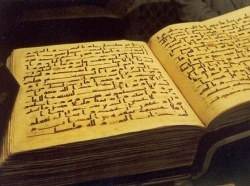
The Quran is the most-read book in the world. Revealed by Allah Almighty to Prophet Muhammad  sallallaahu  `alayhi  wa  sallam ( may  Allah exalt his mention )  (may Allah exalt his mention) in the 7th century CE, and revered by Muslims as being Allah’s Final Scripture and Testament, its words have been lovingly recited, memorized and implemented by Muslims of every nationality ever since. The faithful are inspired, consoled and often moved to tears by its eloquence and poetic imagery, especially when recited aloud. And yet, the Quran is unique in being the only Scripture that is free of scientific inaccuracies, whose historical authenticity can be verified, and whose text has been so carefully preserved that just one authorized version (in Arabic) exists.

The Quran is also the only holy book that can be memorized in its entirety by people of all ages and intellectual abilities – including non-Arabic speakers – which Muslims consider to be one of its miracles. We invite you to take a few minutes to learn something about a book that is the foundation of the worldview and culture of almost a quarter of the people on this planet.

A scientific Scripture for a scientific age 


One of the most remarkable things about the Quran is that it contains many verses, which accurately describe natural phenomena in various fields such as embryology, meteorology, astronomy, geology and oceanography. Scientists have found its descriptions to be inexplicably valid for a book dating from the 7th century CE; in fact, many of the processes and functions mentioned in the Quran have been discovered only recently. This fact alone has been the cause of a number of distinguished scientists embracing Islam. It also explains why the conflicts that emerged in Europe during the Middle Ages between faith and reason, religion and science, never arose in Islam; the Quran repeatedly encourages people to reflect and use their intelligence, and most Muslim scientists and inventors have also been pious believers. 

Some of the Quran’s ‘scientific’ verses include an accurate description of embryonic development during the first forty days of life; an explanation that the roots of mountains are like pegs which help to anchor and stabilize the earth’s crust; that a natural barrier exists wherever two seas meet (each maintains its own salinity, temperature and density); that waves occur in layers in the depths of the ocean; that the heavens and earth were first joined together before being split apart; and that the heavens emerged from ‘smoke’, i.e. the gases and dust that characterize nebul as as stars are forming. 

The Quran was never meant to be a ‘science textbook’; whether highlighting the wonders of nature or the lessons of history, its verses direct us to reflect on the glory of Allah. However, no other ancient book or Scripture is accurate in this way. Muslims believe that this is one of the Quran’s proofs; one of the things that makes it a credible, ‘living revelation’ for a modern age, and allows it to reveal itself afresh with passing time. 


The Quran and the development of knowledge 

The word ‘Quran’ means ‘recitation’, and the first verse of the Quran revealed by the Angel Gabriel to Prophet Muhammad  sallallaahu  `alayhi  wa  sallam ( may  Allah exalt his mention ) was a command to recite as in the verse (which means): ‘Read (or recite)! In the name of your Lord…’ This directive to a man who, like most people of the time, could neither read nor write, marked the beginning of a new age in human communication, learning and development. Whereas earlier Scriptures had been written and passed down by elite circles of priests and scribes – usually long after the death of the Prophet – the preservation of the Quran was a community effort from the beginning, and it was completed during the lifetime of the Prophet Muhammad  sallallaahu  `alayhi  wa  sallam ( may  Allah exalt his mention ).

The early followers of the Prophet  sallallaahu  `alayhi  wa  sallam ( may  Allah exalt his mention ) eagerly memorized and recorded each new revelation as it was revealed; by the time he passed away, thousands had memorized the entire Quran by heart. Within two years after the death of the Prophet  sallallaahu  `alayhi  wa  sallam ( may  Allah exalt his mention ) the first Caliph, Abu Bakr, may Allah be pleased with him, requested one of the Companions who used to write the revelations for the Prophet,  sallallaahu  `alayhi  wa  sallam ( may  Allah exalt his mention ) Zayd bin Thaabit, may Allah be pleased with him, to collect all existing copies and fragments of the Quran in one place, in order to compile a standard edition. This manuscript became the basis for the authorized editions that were distributed to each Muslim province during the rule of ‘Uthmaan, may Allah be pleased with him, the third Caliph. Remarkably, a few of those early manuscripts have been preserved and can still be viewed in museums today. 

A book with a message and a purpose

Like all books, the Quran is a means to convey a message – in this case, a very special message from the Creator to all humanity. The Quran is an ‘Owner’s manual for the human being’. Whoever wonders about the purpose of life and their own existence will find it to be a guide par excellence. Building on prior revelations, this Final Testament confirms the age-old truths of previous Scriptures, but clarifies points of faith where error or confusion have crept into them over the centuries. Those who have read the Bible will find much that is familiar: descriptions of Allah’s creation; stories of the Prophets, may Allah exalt their mention; Satan; Angels and the Day of Judgment; moral and ethical guidelines and spiritual practices like prayer and fasting. Yet the Quran is not just a re-hashing of old stories, its perspective is unique and fresh, and its worldview is eminently suited for people of today.

To give one example, according to the Quran, Allah held Aadam (Adam), may Allah exalt his mention, and Eve jointly responsible for eating from the forbidden tree. No special curse was laid on Eve for leading Aadam may Allah exalt his mention, astray, and no ‘original sin’ came into being, to be inherited for all time by innocent children. Aadam, may Allah exalt his mention and Eve simply sought His forgiveness and were forgiven, and Aadam, may Allah exalt his mention is respected in Islam as the first Prophet. 

There are other important distinctions between the Quran and the Bible; the Quran asserts that much of the original books of the Bible and other Scriptures have been lost or corrupted over time (whether through warfare, political intrigue, religious schisms or other reasons). One only has to consider the number of different versions of the Bible in use today, the lack of ‘first’ originals, and the late discovery of long-lost Scriptures like the Dead Sea Scrolls to realize that this viewpoint is an objective one.

The Quran rejects the concept of salvation or special privilege based on ethnicity. Allah does not discriminate on the basis of race or color. It also denies the need for the sacrifice of innocent life – animal or human – in order for people to attain salvation. It states that ‘Eesaa (Jesus), may Allah exalt his mention,  was not crucified as claimed, but that Allah saved him from his enemies, as one would expect of Allah’s honored and beloved Messenger, may Allah exalt his mention; his life was meant to be an inspiring example. Spiritual salvation is to be achieved solely through humble repentance, coupled by an attempt to make amends for one’s sins and a sincere intention not to repeat one’s mistakes in the future. There is no official priesthood in Islam, and the Imaam (the person who leads the congregational prayer) is no more than a knowledgeable prayer-leader and brother in faith; one’s sins need only be confessed directly to the Creator. 

The Quran’s main message is to call people to turn to the Source of all being and the Giver of life, and to serve Him with a pure heart, free of idolatry or superstition. In Islam, ‘One God’ means just that: there is no concept of Trinity or anything else to complicate one’s understanding. Like the single nucleus of a cell or an atom, He Alone is the ‘control center’ behind it all- anything else would lead to chaos and confusion. Allah is Unique and without partner; He was not born and did not give birth; He is All Compassionate and Merciful, Almighty and Just, and the only One we need to turn to for guidance and help. Anything that we allow to come between ourselves and our Creator – even our own egos – is an idol. Wealth, fame, physical attraction and all the pleasures of this world will someday fade, and we will not be able to take them with us when we die. Only our faith and good deeds will remain, to light our graves and be a beacon for us on the Day of Judgment.

Islam – A Comprehensive Way of Life


To understand the essence of Islam is to understand the very essence of humanity. More than a religion, Islam is a complete and comprehensive way of life leading to a balanced way of living. Islam brings civilization and happiness to man. Islamic principles and teachings can provide realistic, fair and objective solutions to the prevention of individual, familial, social and international problems which are threatening the existence of human communities throughout the world.

A spiritual belief that does not deal with social behavior, economic relations and international organizations is as erroneous as the social doctrine that does not consider spiritual belief, morality and behavior. Such social doctrines are abortive attempts, incapable of total human guidance or of achieving any coherence or accord among human beings.
Both the individual and the society are in dire need of a belief that accommodates and directs all their vital activities towards construction and growth. When the individual and society adopt such a belief and apply it to life, humanity can accomplish seemingly miraculous achievements which can only occur when man unites himself with the Eternal Power that channels his personality -potential in the right direction.
History has shown that Islam is unique in its ability to provide guidance for the entire range of human activity. It does not separate spiritual and secular life as unrelated entities.
Islam integrates all domains of human life, just like the different systems in the human body integrate to provide a complete human being. If one system does not work properly, it has got to affect the whole body. Likewise, Islam proposes systems of laws that integrate all parts of human society to bring happiness and peace to all its members. There is no other way or system that urges the active worship of Allah in its general and most comprehensive sense other than Islam. Fox example, Islam teaches that Muslims should fast for a month every year (i.e. Ramadan) in order to acquire piety and self-discipline and to develop awareness of the needs and problems of others who are starving or are in desperate need of food. Such an awareness of the needs of others is not enough on its own. Therefore, Zakah (obligatory charity) is prescribed to be distributed among the segments of society that are in need of individual and communal assistance.
 A very important universal concept in Islam is “Ummah” (Nation). Ummah transcends all limitations implied by the term ‘nation’ by encompassing all people regardless of race, color, or sex. Allah emphasized this great Islamic principle in the verse (which means);
"Mankind was [of] one religion [before their deviation]; then Allah sent the prophets as bringers of good tidings and warners and sent down with them the Scripture in truth to judge between the people concerning that in which they differed. And none differed over it [i.e. Scripture] except those who were given it-after the clear proofs came to them-out of jealous animosity among themselves. And Allah guided those who believed to the truth concerning that over which they had differed, by His permission. And Allah guides whom He wills to a straight path." [Quran 2:2 13]

Moreover, Islam has a unique understanding for the concept of Ummah. Ummah is the field for knowledge, ethics, government and positivism. Ummah in Islam is a system in which people integrate, even if they belong to different belief systems. It is a system of universal justice and peace that accommodates everyone who believes in freedom of thinking and in calling people to the truth-whether they are individuals or communities.
Indeed, Ummah in Islam is an apparatus which is more advanced than that developed by the West, the UN., or those apparatuses established by the American-European block merely to bring about a “new world order,” but which in reality often are geared only to maintain Western control over Third World human and material resources.
The Prophet Muhammad  sallallaahu  `alayhi  wa  sallam ( may  Allah exalt his mention ) proposed a constitution for the city of Madeenah during the first days of his emigration from Makkah. He  sallallaahu  `alayhi  wa  sallam ( may  Allah exalt his mention ) included the rights of both Jews and Christians, thereby safeguarding their freedom and beliefs. History has never known a constitution that represented minorities as this constitution of the Islamic state did. Ummah as an Islamic concept will, Allah willing, bring the advent of universal peace as well as an internal social system. Ummah is the field-ground for civilization to take place. Such an Ummah can be integrated and united, if it derives its doctrines, constitutions, morals, values and the whole perspective of life from the same united source: belief in the only true Allah. This is known as the concept of Tawheed (Monotheism).  
The value systems of Western societies will continue to collapse, since they are built on shifting grounds. The Sunday Times of London, in its September 1994 issue, reported about a revolt by women against the values prevailing in Britain: ‘‘British women seek new morality in its religious affairs” correspondent Lesley Thomas stated.
According to the report, this is not the case of British women who are favoring Islam. “Thousands of British women are becoming Muslims in a trend that baffles feminists and causes concern to Christians.” The report continues that “of the estimated 10,000 British converts to Islam over the past decade, most are single, educated women, doctors, college lecturers and lawyers.” The educated in the west are beginning to see that the “full” life is found only in Islam, the universal religion.
And what about the present day Muslim world? Unfortunately, some “educated” Muslims now pay only “lip-service” to Islam. They think that Islam is a slogan to be raised or a word to be uttered. Islam is the way of life that should be implemented in all spheres of life. These hypocrites have forgottenthat Allah dislikes those who brag about things that they do not practice. When man’s deeds are not commensurate with their words, their conduct is odious in the sight of Allah.
"O you who have believed, why do you say what you do not do? Great is hatred in the sight of Allah that you say what you do not do." [Quran 61:2-3]

May Allah let the Muslim World never forget that Islam provides a complete and comprehensive way of life. Islam creates harmony in the mind, the soul and the body in a marvelous way. The need for Islam emerges from the humanity’s search for a constitution that provides guidance and satisfaction in all spheres of life. It is a code of life that is not limited to partial needs, but rather a way of life that penetrates all barriers to interact with people’s needs in this life and beyond. It is a way of life where there is no discrimination between what is sacred and what is secular.
Islam is unique among the religions and civilizations the world has known. In contrast to the other religions of the world, Islam defines religion itself as the very business of life, the very matter of space-time, the very process of history, and the gift of Allah. Therefore, all these work together to constitute them.
Islam is a divine guidance wherein humans of all nations, colors and tongues feel linked to a Supreme Power and Justice. Its teachings are kept intact and authentic. It is the only way to happiness, dignity, and universal peace. Islam is so unique in its method for solving the problems of humanity. I can say with confidence that the twenty first century will be the century of Islam. The everlasting miracle of Islam, THE QURAN, is a standing challenge to the intellect of all peoples at all times. In Islam’s four abiding principles - equality, tolerance, promotion of science, and solution to the world’s problems - its universality asserts itself. It calls to all mankind, if only mankind will listen.
"Then do they not reflect upon the Quran? If it had been from [any] other than Allah, they would have found within it much contradiction." [Quran 4:82]

The greatness of #Islamic #justice


Allah created man to be His servant and to implement His Way on earth. If humans distance themselves from this message, then they distance themselves from God’s injunctions. That is why Islam has prepared its followers to follow this righteous instinct; it is a joy to our spirit to stand and think of the greatness of Islamic justice, how fair Islamic law is to individuals and groups, rulers and the ruled!

Let us shed light on one of Islam’s greatest and brightest symbols of justice, Shurayh Al-Qaadhi (the judge), who narrates: The Caliph `Umar ibn Al-Khattaab, may Allah be pleased with him, bought a horse from a Bedouin, paid its price and rode off with it. However, after traveling a little distance, the Caliph noticed some kind of defect in the horse, so he returned to the seller, requesting him to take it back since it was defective. The man refused, telling the Caliph that the horse was perfectly healthy when it was sold to him. `Umar, may Allah be pleased with him, told the man to choose a judge and the man suggested Shurayh ibn Al-Haarith Al-Kindi whom `Umar, may Allah be pleased with him, accepted.
After the judge listened to the Bedouin’s testimony, he turned to `Umar, may Allah be pleased with him, asking: “Was the horse normal and healthy when you bought it?” `Umar, may Allah be pleased with him, replied: “Yes, it was.” Shurayh then said: “Then keep what you bought or return it as you took it.” ‘Umar, may Allah be pleased with him, looked at Shurayh in admiration saying: “Thus justice should be -- statement, distinguishing words and fair justice… I give you the position of Chief Justice of Koofah in ‘Iraq.”

This is Islamic justice, an ordinary Bedouin taking the Caliph to court, deciding which judge to go to and the Caliph accepting the judge’s decision voluntarily. However, this leader was not an ordinary man, but the one about whom the Prophet  sallallaahu  `alayhi  wa  sallam ( may  Allah exalt his mention ) said: “O Allah! Make Islam victorious by one of the two `Umars (by them becoming Muslim).” 
`Umar, may Allah be pleased with him, did not threaten the Bedouin or misuse his power, neither did he tell the Bedouin that he had exceeded his authority nor that he would get back to him. No, `Umar accepted the judge’s decision with all modesty.

`Umar, may Allah be pleased with him, admitted that the horse was healthy when he took it and he accepted the judgment, making the case an everlasting example of Islamic justice. The judge’s fairness made ‘Umar, may Allah be pleased with him, appoint him as a judge of Koofah. He rewarded the judge for his justice and fairness and did not jail him for ruling against him, as some leaders may have done in present so-called ‘democracies’.

Another example of Shurayh’s justice

‘Ali ibn Abu Talib, may Allah be pleased with him, lost a shield that was dear to him and later found it in the hands of a non-Muslim citizen who was selling it in one of Koofah’s markets. When he saw it, ‘Ali, may Allah be pleased with him, said: “This is my shield that fell off my camel on so and so night at such and such time.” The man answered: “No, this is my shield in my hand.” ‘Ali, may Allah be pleased with him, replied: “No, it is mine since I never sold it or gave it to anyone.”

The man agreed to let a judge decide, which ‘Ali, may Allah be pleased with him, accepted. They went to Shurayh who asked ‘Ali, may Allah be pleased with him, for his side of the story. ‘Ali, may Allah be pleased with him, said that the shield was his and that he had found it with that man; it had fallen off his camel and he had never sold it or given it to anyone. The judge turned to the other man asking his story. The man said that he did not accuse ‘Ali, may Allah be pleased with him, of lying, but the shield was his, as it was in his hands. 
Shurayh turned to ‘Ali, may Allah be pleased with him, saying: “I believe you, but we need the testimony of two witnesses to back your story.” ‘Ali, may Allah be pleased with him, said that there was his aide Qanbar and his son Al-Hassan, may Allah be pleased with him, to which the man replied that a son could not testify for the benefit of his father. Ali, may Allah be pleased with him, said: “O Allah, a man who is promised paradise cannot act as a witness! Have you not heard what the Prophet, may Allah be pleased with him, said that Al-Hassan and Al-Hussayn, may Allah be pleased with them, were the masters of the youths of paradise? Shurayh said: “Yes, I have, but a son cannot bear witness for his father.”

Then ‘Ali turned to the man and said: “Take the shield, as I have no other witnesses.”
The man, who was a non-Muslim, then said: “O ‘Ali, the shield is yours. What a great religion! I can sue ‘Ali and get a judge to pass a decision for my benefit! I declare myself a Muslim.” He told the judge that he was following the army and had seen the shield fall down and picked it up. ‘Ali, may Allah be pleased with him, then told him to keep the shield, and on top of that, he also gave him a horse. Soon after, the man was seen under Ali’s leadership fighting the Khawaarij [Kharijites –are one of the deviant sects, who follow their whims and desires and innovation, and deviated from the path of Ahlus-Sunnah wa’l-Jamaa‘ah].

Are these two examples not sufficient for us to follow those great men?

The beauty of Islam as seen by others


American poet, critic and author Colonel Donald S. Rockwell writes: "The simplicity of Islam, the powerful appeal and the compelling atmosphere of its mosques, the earnestness of its faithful followers, the confidence inspiring realization of millions throughout the world who answer the five daily calls to prayer, these factors attracted me from the first. 

But after I had determined to become a follower of Islam, I found many deeper reasons for confirming my decision. The mellow concept of life -- fruit of the combined course of action and contemplation, the wise counsel, the admonitions to charity and mercy of the Prophet,  sallallaahu  `alayhi  wa  sallam ( may  Allah exalt his mention ), (may Allah exalt his mention). 

The broad humanitarianism, the pioneer declaration of women's rights, these and other factors of the teachings of the man of Makkah, were to me among the first obvious evidence of a practical religion so tersely and so aptly epitomized in the cryptic words of Prophet Muhammad,  sallallaahu  `alayhi  wa  sallam ( may  Allah exalt his mention ): 'Trust in God and tie your camel.' He gave us a religious system of normal action, not blind faith in the protection of an unseen force in spite of our own neglect, but confidence that if we do all things rightly and to the best of our ability, we may trust in what comes as the Will of God... 

When I stood in the inspiring mosques of Istanbul, Damascus, Jerusalem, Cairo, Algiers, Tangier, Fez and other cities, I was conscious of a powerful reaction -- the potent uplift of Islam's simple appeal to the sense of higher things, unaided by elaborate trappings, ornamentation, figures, pictures, music and ceremonial ritual. The mosque is a place of quiet contemplation and self-effacement in the greater reality of the true God. 

The democracy of Islam has always appealed to me. Potentate and pauper have the same rights on the floor of the mosque, on their knees in humble worship. There are no rented pews or special reserved seats.

The Muslim accepts no man as mediator between himself and his God. He goes direct to the invisible source of creation and life -- God -- without reliance on a saving formula of repentance of sins and belief in the power of a teacher to afford him salvation. The universal brotherhood of Islam, regardless of race, politics, color or country, has been brought home to me most keenly many times in my life, and this is another feature which drew me towards the Faith." 

The baseless claim that Islam converted the peoples it had 'conquered by force' has also been refuted by prominent non-Muslims.


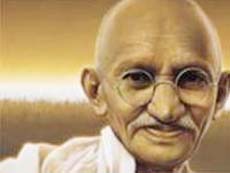
Mahatma Gandhi, for instance, writes in Young Indian, 1924:

"I became more than ever convinced that it was not the sword that won a place for Islam in those days in the scheme of life. It was the rigid simplicity, the utter self-effacement of the Prophet,  sallallaahu  `alayhi  wa  sallam ( may  Allah exalt his mention ), the scrupulous regard for his pledges, his intense devotion to his friends and followers, his intrepidity, his absolute trust in God and his own mission. These and not the sword carried everything before them and surmounted every trouble." 

James A. Michener writes in the Reader's Digest, under the title Islam: The Misunderstood Religion: "No other religion in history spread so rapidly as Islam. The West has widely believed that this surge of religion was made possible by the sword. But no modern scholar accepts that idea, and the Quran is explicit in support of the freedom of conscience." 

Laurence E. Browne writes in The Prospects of Islam: "Incidentally, these well-established facts dispose of the idea so widely fostered in Christian writings about the Muslims, that wherever they went, they forced people to accept Islam at the point of the sword."

De Lay O'Leany also writes in Islam at Crossroads, London, 1923, p. 8: "History makes it clear, however, that the legend of fanatical Muslims, sweeping through the world and forcing Islam at the point of the sword upon conquered races is one of the most fanatically absurd myths that historians have ever repeated." 

It is worth mentioning here that it is absolutely wrong to judge Islam by the deteriorating condition of Muslims and the blatant corruption that pervades the Muslim world. What Islam preaches is one thing, and what so many Muslims nowadays practice is something else. 

The only way whereby we do justice to Islam is to find out about its noble teachings, which are clearly set out at length in the Holy Quran and the Prophetic traditions. The famous popular singer, Cat Stevens, who later embraced Islam once observed: "It will be wrong to judge Islam in the light of the behavior of some bad Muslims who are always shown on the media. 

It is like judging a car as a bad one if the driver is drunk and he bangs it into a wall. Islam guides all human beings in daily life -- in its spiritual, mental and physical dimensions. Nevertheless, we must find the sources of these instructions -- the Quran and the example of the Prophet,  sallallaahu  `alayhi  wa  sallam ( may  Allah exalt his mention ). Then we can see the idea of Islam." 

What is generally said about Islam in the media and in many academic circles can also give a wrong idea about it. As Maurice Bucaille put it: "The totally erroneous statements made about Islam in the West are sometimes the result of ignorance, and sometimes of systematic denigration. 

The most serious of all the untruths told about it are, however, those dealing with facts, for while mistaken opinions are excusable, the presentation of facts running contrary to reality is not. It is disturbing to read blatant untruths in eminently respectable works written by authors who a priori are highly qualified."

[From: A Glimpse at the Beauty of Islam]

Belief in the #Heavenly #Books - I


In the cave of Hiraa’ and away from people, Jibreel (Gabriel) came down to our Prophet Muhammad  sallallaahu  `alayhi  wa  sallam ( may  Allah exalt his mention ) while he was worshiping Allah The Almighty The One Who Has no partner and said to him: "Recite." Muhammad  sallallaahu  `alayhi  wa  sallam ( may  Allah exalt his mention ) said, "I cannot recite,". Jibreel pressed him hard and repeated the order ‘Recite.’ ‘I cannot recite’ said he trembling and terrified, and once again he pressed him hard and said: ‘Recite.’ Again he answered while shaking and trembling ‘I cannot recite.’ Jibreel held him for the third time then released him and said: {Recite in the name of your Lord who created.} [Quran 96: 1]
Then this situation comes to an end and Jibreel disappears. Muhammad hurries back home, trembling and sweating profusely. He enters upon his wife Khadeejah and says to her: Cover me, cover me. [Al-Bukhari] She covers him with wool covers, and wipes the sweat from his forehead.

The Will of Allah The Almighty has been fulfilled and the seal prophet on earth was chosen to convey the call of Allah The Almighty to His slaves. The verse mentioned above was the first verse that Allah The Almighty revealed to His Messenger from the Noble Quran which is the book that Allah The Almighty chose to be the ever-lasting miracle and clear argument with the seal of the Prophets. This book is not the only book that Allah The Almighty has sent down; rather, there are other books such as Tawraah (Torah) Injeel (Gospel), Zaboor (Psalms), and Suhuf (Scriptures).

The Muslim individual believes in all books that Allah The Almighty revealed to His Prophets and Messengers in much the same way as he believes in the Noble Quran which Allah The Almighty revealed to Muhammad  sallallaahu  `alayhi  wa  sallam ( may  Allah exalt his mention ). Allah The Almighty mentioned some of these books in the Noble Quran and did not mention some others. Allah The Almighty Says (what means): {Mankind was [of] one religion [before their deviation]; then Allah sent the prophets as bringers of good tidings and warners and sent down with them the Scripture in truth to judge between the people concerning that in which they differed. And none differed over the Scripture except those who were given it - after the clear proofs came to them - out of jealous animosity among themselves. And Allah guided those who believed to the truth concerning that over which they had differed.} [Quran 2: 213]

Amongst the books that Allah The Almighty mentioned in the Noble Quran are:

1. The Scriptures of Ibraaheem (Abraham) and Moosa (Moses), may Allah exalt their mention:

They are the Scriptures that Allah The Almighty sent down to Ibraaheem and Musa, may Allah exalt their mention. Allah The Almighty Says (what means):

• {Or has he not been informed of what was in the scriptures of Moses. And [of] Abraham, who fulfilled [his obligations]} [Quran 53: 36-37]

• {Indeed, this is in the former scriptures, The scriptures of Abraham and Moses} [Quran 87: 18-19]

Abu Tharr, may Allah be pleased with him, said: I said: O Messenger of Allah! How were the Scriptures of Ibraaheem, may Allah exalt his mention? He said: They were full of examples; O Arrogant tested domineering king! I have not sent you to collect the vain gains of this world, but rather I sent you to respond to the supplication of the wronged person on my behalf for I never reject it even if it is from a disbeliever. Every sane person must – as long as his mind is not absent - take time to invoke his lord, time to bring himself to account, time to contemplate the creation of Allah The Almighty, and time to seek his needs from food and drinking.
Every sane person must not move except for three things: preparing the provision for the appointed time, improving his life and enjoying a lawful pleasure. Also, every sane person must be mindful of his time, must look after his affairs and protect his tongue (from obscene speech). Whoever thinks of his speech as part of his deeds, he will not speak except in what is beneficial for him.
Then I said: O Messenger of Allah! How were the Scriptures of Moosa (Moses), may Allah exalt his mention? He said: “They were full of wisdoms: I am amazed at the one who is certain of death and then he feels happy. I am amazed at the one who is certain of Hell and then he laughs. I am amazed at the one who is certain of preordainance and then he exhausts himself. I am amazed at the one who has seen the world and how the fortunes of its people change and then he feels reassured. I am amazed at the one who is certain of Reckoning tomorrow and then he does not work.”

2. Tawraah (Torah)

It is the book that Allah The Almighty revealed to Moosa (Moses), may Allah exalt his mention, and ordered the prophets who came after him to establish and fulfill its rulings, for Allah The Almighty sent them and did not send any books with them; rather, He made Tawraah their book and religion. Allah The Almighty Says (what means): {Indeed, We sent down the Torah, in which was guidance and light. The prophets who submitted [to Allah ] judged by it for the Jews, as did the rabbis and scholars by that with which they were entrusted of the Scripture of Allah , and they were witnesses thereto.} [Quran 5: 44] Allah The Almighty called he Tawraah “Al-Furqaan” in the Noble Quran.

3. Az-Zaboor (Psalms)

It is one of the heavenly books. Allah The Almighty revealed it to Daawood (David), may Allah exalt his mention. Allah The Almighty Says (what means): {And to David We gave the book [of Psalms].} [Quran 17: 55] Daawood, may Allah exalt his mention, used to read a great deal in Az-Zaboor which the Messenger of Allah  sallallaahu  `alayhi  wa  sallam ( may  Allah exalt his mention ) named Quran because of its similarity to the Noble Quran in their miraculousness. He  sallallaahu  `alayhi  wa  sallam ( may  Allah exalt his mention ) said: “The reciting of the Zaboor (i.e. Psalms) was made easy for Daawood. He used to order that his riding animals be saddled, and would finish reciting the Zaboor before they were saddled. And he would never eat except from the earnings of his manual work.” [Al-Bukhari]

Allah The Almighty sent down in Az-Zaboor precious wisdoms and praises of Him. Allah The Almighty did not reveal in it any rulings of the permissible and prohibited actions for they were enjoined to take their rulings from the Tawraah. 

4. Injeel (Gospel)

Allah The Almighty revealed it to ‘Eesa (Jesus), may Allah exalt his mention. Allah The Almighty Says (what means):

• {And We sent, following in their footsteps, Jesus, the son of Mary, confirming that which came before him in the Torah; and We gave him the Gospel, in which was guidance and light and confirming that which preceded it of the Torah as guidance and instruction for the righteous.} [Quran 5: 46] 
• {Then We sent following their footsteps Our messengers and followed [them] with Jesus, the son of Mary, and gave him the Gospel} [Quran 57: 27]

Wisdom behind revealing Books

The Muslim individual believes that these books were revealed by Allah The Almighty. They called to At-Tawheed (monotheism) and to associating nothing with Him. Allah The Almighty Says (what means): {And We certainly sent into every nation a messenger, [saying], "Worship Allah and avoid Taghut.} [Quran 16: 36]

The Muslim believes that the wisdom behind revealing books is to guide human beings to the straight path of Allah The Almighty, eliminate disagreement and discord from among them, bear for them the glad tidings of the pleasure of Allah The Almighty if they obeyed Him and warn them against His punishment if the disobeyed Him; and that the heavenly books – other than the Noble Quran – have not remained in their original state in which Allah The Almighty sent them down; rather, they were exposed to alteration and distortion and the words of humans have mingled with the Words of Allah The Almighty in them.

Forms of the distortion of the Divinly Revealed Books 

Distortion of the divinely revealed books took different forms. The Noble Quran mentioned some of them such as:

1- Hiding some verses, Allah The Almighty Says (what means): {O People of the Scripture, there has come to you Our Messenger making clear to you much of what you used to conceal of the Scripture and overlooking much.} [Quran 5: 15] 
2- Misinterpretation of the intended meanings of the verses, Allah The Almighty Says (what means): {And indeed, there is among them a party who alter the Scripture with their tongues so you may think it is from the Scripture, but it is not from the Scripture. And they say, "This is from Allah," but it is not from Allah. And they speak untruth about Allah while they know.} [Quran 3: 78] 
3- Displacing verses from their original places. Allah The Almighty Says (what means): {Among the Jews are those who distort words from their [proper] usages and say, "We hear and disobey.} [Quran 4: 46]
4- Adding what is not from the Book to it; Allah The Almighty Says (what means): {And among them are unlettered ones who do not know the Scripture except in wishful thinking, but they are only assuming. So woe to those who write the "scripture" with their own hands, then say, "This is from Allah ," in order to exchange it for a small price. Woe to them for what their hands have written and woe to them for what they earn.} [Quran 2: 78-79]

Distortion of the Tawraah (Torah)

Belief in the Tawraah that Allah The Almighty revealed to Moosa, may Allah exalt his mention, is one of the main pillars of the religion of Islam. Muslims believe that it included all goodness, called for the worship of Allah Alone and it was a light and guidance. Allah The Almighty Says (what means): {Indeed, We sent down the Torah, in which was guidance and light.} [Quran 5: 44]

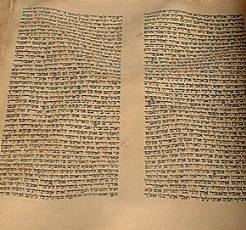
However, the Tawraah that was revealed to Moosa, may Allah exalt his mention, does not exist anymore in its original state. The claimed Tawraah of nowadays was written by many writers and in different times. It was distorted and altered.

Amongst the material proofs of its distortion is that the Tawraah that is in the hands of Christians is different from the one that is in the hands of Jews. The Noble Quran recorded that distortion and rebuked the Jews for their distortion and alteration of the Tawraah. Allah The Almighty Says (what means): {Do you covet [the hope, O believers], that they would believe for you while a party of them used to hear the words of Allah and then distort the Torah after they had understood it while they were knowing?} [Quran 2: 75]

They had the nerve to distort and alter the Book of Allah The Almighty to hide the truth that it contained and all that can prove the prophethood of Muhammad  sallallaahu  `alayhi  wa  sallam ( may  Allah exalt his mention ) although they knew him well. Allah The Almighty Says (what means): {Those to whom We gave the Scripture know him as they know their own sons. But indeed, a party of them conceal the truth while they know [it].} [Quran 2: 146] Though they knew him well, they did not believe in him and were too arrogant to do so. Allah The Almighty Says (what means): {Among the Jews are those who distort words from their [proper] usages.} [Quran 4: 46]

Amongst the evidences that prove the distortion of the current Tawraah are the descriptions mentioned in it which do not befit the Majesty and Perfection of Allah The Almighty such as: And the LORD God said, Behold, the man has become as one of us, to know good and evil.” [Genesis 3: 22] and “And it repented the LORD that he had made man on the earth, and it grieved him at his heart. [Genesis 6: 6].”

Can these be the Words of Allah The Almighty? Can grief and regret be attributed to Allah The Almighty? In fact, such malicious claims entail that Allah The Almighty did not have knowledge of the results of His actions. No, Allah The Almighty is high above any defect and shortcoming. Allah The Almighty has comprehensive knowledge that encompasses everything. Exalted is He and high above what they say by great sublimity.

Another proof of the distortion of the current Tawraah is what is mentioned in it of describing prophets in a way that negates the infallibility that Allah The Almighty granted them. They mentioned that Ibraaheem (Abraham) is a liar, that Haroon (Aaron) called Banu Israa’eel (Children of Israel) to worship the Calf, and that Sulaymaan (Solomon) worshiped idols to please his wife. Can any human being who has a sound mind say such words; let alone being revealed by Allah The Almighty to guide humans with it?

Belief in the #Heavenly #Books - II


Distortion of the Injeel (Gospel)

The Injeel was also distorted and altered and is not in its original state in which Allah The Almighty revealed it. Christians contintued altering and changing its facts so as to attain their desired worldly gains.

The distortion of the current versions of the Injeel can simply be proved if we know that they are four versions of the Injeel selected from many more versions. Such versions reported the words of Prophet ‘Eesa, may Allah exalt his mention. Their writers are known and their names are written on them. In the library of one of the princes in Paris, a version of the Injeel – Injeel (Gospel) of Barnabas - was found. It differed greatly from the other four selected versions of the Injeel and agreed with the Noble Quran in many beliefs and principles.

After we have known for certain that those books have been distorted, then what is the meaning that the Noble Quran came to confirm in the divine books that preceded it? This simply means that the Noble Quran came to enhance and support the truth which was mentioned in the books that came before it, mainly worshiping Allah The Almighty Alone, believing in His Messengers, believing in the reward, observing rights and justice, enjoining good and forbidding evil, and adhering to noble moral standards. Allah The Almighty Says (what means): {Say, "O People of the Scripture, you are [standing] on nothing until you uphold [the law of] the Torah, the Gospel, and what has been revealed to you from your Lord."} [Quran 5: 68]

Consequently, the Quran is the only way with which we can know the sound divine teachings. It is the book whose fundamental principles are preserved, its teachings are not distorted, and the Ummah received it from the angel who brings down the Revelation to the Messengers - Jibreel, may Allah exalt his mention - who came down to the Messenger  sallallaahu  `alayhi  wa  sallam ( may  Allah exalt his mention ). This preservation was not granted to any book other than the Noble Quran. In fact, the Quran comprises the most sublime principles, methods and systems. It has all that humans need of beliefs, acts of worship, morals, and transactions. It befits all times and places. It is sufficient to create a Muslim individual, a virtuous family and a righteous society. Truthful is the one who speaks with it. Just is the one who passes judgment according to it. Guided to the right path is the one who adheres to its teachings. Allah The Almighty Says (what means): {There has come to you from Allah a light and a clear Book. By which Allah guides those who pursue His pleasure to the ways of peace and brings them out from darknesses into the light, by His permission, and guides them to a straight path.} [Quran 5: 15-16]

The Previous Divinely Revealed Books Were not Universal

The books that Allah The Almighty revealed, other than the Quran, addressed certain people in certain times and they agreed with the Noble Quran in some rulings and laws. Allah The Almighty Says (what means): {And We ordained for them therein a life for a life, an eye for an eye, a nose for a nose, an ear for an ear, a tooth for a tooth, and for wounds is legal retribution.} [Quran 5: 45]
Muslims believe in what is mentioned in these books as long as it does not contradict with the Quran. They also believe that the Noble Quran is the main constitution for all people.

Characteristics of the Noble Quran

The Noble Quran has many characteristics that distinguish it from the books that came before it. Amongst such characteristics are:
• It has all the divine instructions that Allah The Almighty revealed in the Tawraah, the Injeel, and all the teachings that Allah The Almighty revealed.

• It supports the truth which was mentioned in these books regarding worshiping Allah The Almighty Alone, believing in His Messengers, believing in reward, observing and establishing rights, enjoining good and forbidding evil, and adhering to noble moral standards. Allah The Almighty Says (what means): {And We have revealed to you, [O Muhammad], the Book in truth, confirming that which preceded it of the Scripture and as a criterion over it. So judge between them by what Allah has revealed and do not follow their inclinations away from what has come to you of the truth. To each of you We prescribed a law and a method.} [Quran 5: 48]

That is to say, Allah The Almighty revealed the Noble Quran which is truthful in all that is mentioned in it and it confirms the preceding Scriptures that were revealed by Allah The Almighty. It is a witness over them. It explains the distortion and alteration that inflicted them. Then Allah The Almighty ordered His Prophet  sallallaahu  `alayhi  wa  sallam ( may  Allah exalt his mention ) to judge between all people, Muslims and non-Muslims, by what Allah The Almighty has revealed in the Noble Quran and not to follow them in disobeying Allah The Almighty.

• Allah The Almighty prescribed a law for every nation with its rulings and different interactions that befit its nature and inclinations in the best way. The main pillars of creeds are the same in all messages. Allah The Almighty Says (what means): {He has ordained for you of religion what He enjoined upon Noah and that which We have revealed to you, [O Muhammad], and what We enjoined upon Abraham and Moses and Jesus - to establish the religion and not be divided therein.} [Quran 42: 13] 
Then when Islam came, it abrogated all other laws and methods. It established only one creed and method for all people.

• The original versions of the books that were revealed before the Quran were lost. Nothing remained of them except their translations, unlike the Noble Quran which was preserved as a whole with its Soorahs, verses, words, and letters exactly as Jibreel, may Allah exalt his mention, recited it to the Messenger of Allah  sallallaahu  `alayhi  wa  sallam ( may  Allah exalt his mention ). In the previous books, the words of humans were mixed with the Words of Allah The Almighty. No one can recognize the words of Allah The Almighty from those of humans. As for the Noble Quran, all of its words are from Allah The Almighty and they were never mixed with the Hadeeths of the Messenger or the speeches of the companions or any other person.

• None of those books can in any way be attributed to the Messenger to whom it was revealed. The Tawraah (Torah) was not written by Moosa (Moses). In fact, it was written many centuries after Moosa. The Noble Quran is the only book that was proved to be decisively attributed to the Messenger  sallallaahu  `alayhi  wa  sallam ( may  Allah exalt his mention ) (even if he did not write it down himself, for he ordered the writers of the revelation to record every verse immediately after it was revealed to him).

• The teachings of the Noble Quran are the Words of Allah The Almighty that can achieve happiness to all humanity. So Allah The Almighty Willed for it to last forever. He preserved and protected it from distortion. Allah The Almighty Says (what means):

• {And indeed, it is a mighty Book Falsehood cannot approach it from before it or from behind it; [it is] a revelation from a [Lord who is] Wise and Praiseworthy.} [Quran 41: 41-42]

• {Indeed, it is We who sent down the Quran and indeed, We will be its guardian} [Quran 15: 9]

The wisdom behind that is to make the Quran the argument of Allah The Almighty over people. The Quran is for all worlds and all people. It is not for a specific people unlike the previous heavenly books. Allah The Almighty Says (what means): {And We have not sent you except comprehensively to mankind as a bringer of good tidings and a warner.} [Quran 34: 28]

• The Quran is the guidance that leads to all that is good. Allah The Almighty Says (what means): {Alif, Lam, Meem. This is the Book about which there is no doubt, a guidance for those conscious of Allah} [Quran 2: 1-2] Allah The Almighty wants His word to spread and reach minds and ears everywhere. This will not be attained except if the Quran is easy to memorize and understand. Nothing in the Quran is difficult for people to understand or fulfill. Allah The Almighty Says (what means): {And We have certainly made the Quran easy for remembrance, so is there any who will remember?} [Quran 54: 17]

• The Quran is also the miracle of the Messenger  sallallaahu  `alayhi  wa  sallam ( may  Allah exalt his mention ). In fact, if the whole world gathered in order to produce something like what is mentioned in the Quran, they could not produce the like of it for it is as Allah The Almighty Says (what means): {And indeed, it is a mighty Book. Falsehood cannot approach it from before it or from behind it; [it is] a revelation from a [Lord who is] Wise and Praiseworthy.} [Quran 41: 41-42]

• The Quran is an invitation to every good matter and forbids every vice. Allah The Almighty Says (what means): {O mankind, there has come to you instruction from your Lord and healing for what is in the breasts.} [Quran 10: 57]

• The Quran is a cure for souls. It purifies them from their diseases. It is a remedy from disbelief, misguidance, hatred and envy. Allah The Almighty Says (what means): {And We send down of the Quran that which is healing and mercy for the believers, but it does not increase the wrongdoers except in loss.} [Quran 17: 82]

الجمعة، 22 ديسمبر 2017

The covenant of '#Umar


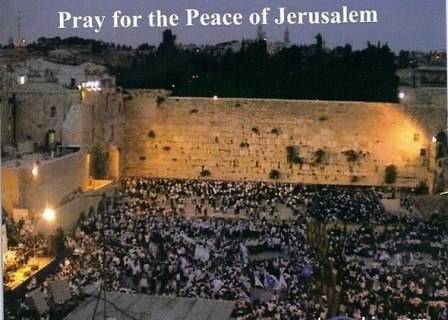
When `Umar Ibnul-Khatab  may  Allah  be  pleased  with  him (the second Caliph) entered Jerusalem at the head of a Muslim army in 638CE, he entered the city on foot, as a gesture of humility. There was no bloodshed. On the contrary, those who wanted to leave were allowed to do so with all their possessions and were guaranteed a safe passage. While those who wanted to stay were granted protection for their lives, their property, and their places of worship.

`Umar declined the offer made by Patriarch Sophronius, chief magistrate of the surrendered city, to pray one of the five daily prayers in the Church of the Holy Sepulchre, lest in years to come Muslims might try to turn it into a mosque in his memory.

“In the Name of Allah, the Most Merciful, the Most Compassionate.

This is an assurance of peace and protection given by the servant of Allah Omar, Commander of the Believers to the people of Ilia’ (Jerusalem). He gave them an assurance of protection for their lives, property, churches and crosses as well as the sick and healthy and all its religious community.
Their churches shall not be occupied, demolished nor taken away wholly or in part. None of their crosses nor property shall be seized. They shall not be coerced in their religion nor shall any of them be injured.

The people of Ilia shall pay Jizia tax (head tax on non- Muslims living under the protection of Muslim rule; paid for utilizing the benefits of citizenship and as exemption from military service) as inhabitants of cities do.

He whoever gets out shall be guaranteed safety for his life and property until he reaches his safe haven. He whoever stays shall (also) be safe, in which case he shall pay as much tax as the people of Ilia’ do.

Should any of the people of Ilia wish to move together with their property along with the Romans and to clear out of their churches and crosses, they shall be guaranteed safety for their lives, churches and crosses, until they have reached their safe haven.

He whoever chooses to stay may do so and he shall pay as much tax as the people of Ilia’ do. He whoever wishes to move along with the Roman, may do so, and whoever wishes to return back home to his kinsfolk, may do so.

Nothing shall be taken from them until their crops have been harvested. To the contents of this covenant here are given the Covenant of Allah, the guarantees of His Messenger, the Caliphs and the Believers, provided they (the people of Ilia’) pay their due Jizia tax.

Witnesses hereto are: Khalid Ibnul-Waleed, AbdurRahman Ibn’Auf, Amr Ibnul-`Aas and Mu’awiya Ibn abi-Sufan. Made and executed in the year 15 AH.

The Master of Memorizers: Abu Hurayrah


He is the honorable Companion Abu Hurayrah, may Allah be pleased with him. Before embracing Islam, he was called ‘Abd Shams (slave of the sun). After he embraced Islam, the Prophet  sallallaahu  `alayhi  wa  sallam ( may  Allah exalt his mention ) called him ‘Abdur-Rahman (Slave of The Most-Merciful) and gave him the nickname of Abu Hurayrah (the father of a kitten).

There is a humorous reason behind this nickname. ‘Abdur-Rahman, may Allah be pleased with him, was famous for being humane to animals and he had a kitten that he was kind to and he took care of it. It used to accompany him everywhere. Therefore, he was called Abu Hurayrah. The Messenger of Allah  sallallaahu  `alayhi  wa  sallam ( may  Allah exalt his mention ) used to address him using this nickname. It was narrated in a Hadeeth that the Prophet  sallallaahu  `alayhi  wa  sallam ( may  Allah exalt his mention ) said to him: “Come here, O Abu Hurayrah!” [Al-Bukhari]

Abu Hurayrah, may Allah be pleased with him, was born in the tribe of Daws, an Arabian tribe. He reverted to Islam in the year of conquering Khaybar in 7 A.H. After embracing Islam, he used to accompany the Prophet  sallallaahu  `alayhi  wa  sallam ( may  Allah exalt his mention ) and sit with him for long periods of time learning from him.

Abu Hurayrah, may Allah be pleased with him, tried many times to invite his mother to Islam, but she refused.

One day, he invited her to Islam, but she refused and said bad words about the Prophet  sallallaahu  `alayhi  wa  sallam ( may  Allah exalt his mention ). Consequently, Abu Hurayrah, may Allah be pleased with him, went to the Prophet  sallallaahu  `alayhi  wa  sallam ( may  Allah exalt his mention ) weeping and said, “O Messenger of Allah, I called my mother to Islam but she turned down my call. I called her today but she said things about you that I hated to hear. Supplicate Allah to Guide the mother of Abu Hurayrah.” The Messenger of Allah  sallallaahu  `alayhi  wa  sallam ( may  Allah exalt his mention ) said, “O Allah! Guide the mother of Abu Hurayrah to the right path.” I left, feeling optimistic because of the supplication of the Messenger of Allah  sallallaahu  `alayhi  wa  sallam ( may  Allah exalt his mention ).

When I came near the door, it was closed from within. My mother heard the sound of my footsteps, and said, “O Abu Hurayrah! Wait! ” I heard the sound of water. She took a bath and put on a dress and was too hasty to put on her head cover, then opened the door and said, “O Abu Hurayrah! I testify that there is none worthy of worship but Allah and that Muhammad is His slave and Messenger.” Abu Hurayrah added, “I went back to the Messenger of Allah  sallallaahu  `alayhi  wa  sallam ( may  Allah exalt his mention ) shedding tears of joy. I said, ‘O Messenger of Allah! Be happy, for Allah has answered your supplication and guided the mother of Abu Hurayrah to the right path.’ The Prophet  sallallaahu  `alayhi  wa  sallam ( may  Allah exalt his mention ) praised Allah, and lauded Him, and said good words.

I said, ‘O Messenger of Allah! Supplicate Allah for me and my mother to be loved by His believing Slaves and for us to love them too.’ The Messenger of Allah  sallallaahu  `alayhi  wa  sallam ( may  Allah exalt his mention ) said, ‘O Allah! Make this slave of Yours and his mother (i.e. Abu Hurayrah and his mother) loved by Your believing slaves and make them love Your believing slaves.’ This supplication has been answered by Allah, The Almighty, so much that any believer who heard about me loved me.” [Muslim]

Abu Hurayrah, may Allah be pleased with him, used to like fighting in the Cause of Allah. He joined the battles, attended sessions of knowledge and accompanied the Prophet  sallallaahu  `alayhi  wa  sallam ( may  Allah exalt his mention ). He was the most attached Companion to the Prophet  sallallaahu  `alayhi  wa  sallam ( may  Allah exalt his mention ). Compared to other Companions, Abu Hurayrah, may Allah be pleased with him, memorized the highest number of narrated Ahadeeth from the Prophet  sallallaahu  `alayhi  wa  sallam ( may  Allah exalt his mention ). One of the Companions said about him, “Abu Hurayrah narrated a lot of Ahadeeth and the Muhaajiroon and the Ansaar did not narrate like him.” He used to reply to this saying, “My brothers among the Ansaar were busy with farming their lands and my brothers among the Muhaajiroon were busy with trading. I used to serve the Messenger of Allah  sallallaahu  `alayhi  wa  sallam ( may  Allah exalt his mention ) in return for what would fill my stomach. So, I witness any situation if they are absent and memorize if they forget. The Prophet  sallallaahu  `alayhi  wa  sallam ( may  Allah exalt his mention ) said, ‘Whoever will spread his upper garment until I finish my speech and then fold it, (i.e. wrap it over his body), he will never forget anything he had heard from me.’ So, I spread the garment which I was wearing, and by Him Who sent Muhammad with the Truth (i.e. Allah), ever since, I have never forgotten whatever I heard from him (the Prophet  sallallaahu  `alayhi  wa  sallam ( may  Allah exalt his mention )).” [Muslim]

He also said, “Had it not been for two revealed verses in the Book of Allah, I would never have narrated anything. Allah, The Almighty, Says (what means): {Indeed, those who conceal what We sent down of clear proofs and guidance after We made it clear for the people in the Scripture - those are cursed by Allah and cursed by those who curse. Except for those who repent and correct themselves and make evident [what they concealed]. Those - I will accept their repentance, and I am the Accepting of repentance, the Merciful. } [Quran 2:159-160]”

Abu Hurayrah, may Allah be pleased with him, had an excellent memory and he was able to quickly memorize and did not forget. Ash-Shafi‘i  may  Allah  have  mercy  upon  him said about him, “He is the person who memorized most of the Hadeeth in his time.” Abu Hurayrah, may Allah be pleased with him, said about himself, “No one knows the Ahadeeth of the Prophet  sallallaahu  `alayhi  wa  sallam ( may  Allah exalt his mention ) more than me except Abdullah ibn ‘Amr, for he used to write them but I did not.”

He liked knowledge and his students used to visit him until there would be no space left in his home. He was highly esteemed for his knowledge. One day, he stretched out his legs and said, “We entered the home of the Messenger of Allah  sallallaahu  `alayhi  wa  sallam ( may  Allah exalt his mention ) until we filled the home while he was reclining on his side. When he saw us he bent his legs and said, ‘After me, there will be people coming to you seeking knowledge. So, welcome, greet and teach them.’” [Ibn Majah]

Abu Hurayrah, may Allah be pleased with him, was extremely poor and he used to tie a stone on his stomach due to extreme hunger; he said:

By Allah! I used to lay (asleep) on the ground on my liver (abdomen) because of hunger, and (sometimes) I would bind a stone over my belly because of hunger. One day, I sat by the way where people used to walk. When Abu Bakr, may Allah be pleased with him, passed by, I asked him about a verse in the Noble Quran and my only purpose in asking him was that he might satisfy my hunger, but he passed by and did not do so. Then ‘Umar, may Allah be pleased with him, passed by and I asked him about a verse in the Noble Quran, and my only purpose in asking him was that he might satisfy my hunger, but he passed by without doing so. Finally, Abul-Qaasim (i.e. the Prophet  sallallaahu  `alayhi  wa  sallam ( may  Allah exalt his mention )) passed by and knew from my face (that I was hungry). He said, “O Abu Hurayrah!” I replied, “Yes, O Messenger of Allah!” He said to me, “Follow me.” He left and I followed him. Then he entered the house and I asked permission to enter and was admitted. He found milk in a bowl and said, “From where is this milk?” They said, “It has been granted to you by such-and-such man (or by such and such family).” He said, "O Abu Hirr!" I said, "Yes, O Messenger of Allah!” He said, “Go and call the people of Suffah to me.” The people of Suffah were the guests of Islam who had no families, nor money, nor anybody to depend upon, and whenever an object of charity was brought to the Messenger of Allah   sallallaahu  `alayhi  wa  sallam ( may  Allah exalt his mention ) he would send it to them and would not take anything from it, and whenever any gift was given to him, he used to send some for them and take some of it for himself. This made me sad, as I hoped to have a little of this milk in order to have strength for the rest of the day. When the people came I gave them some of this milk. I was wondering what would remain of that milk for me, but anyway, I could only obey Allah and His Messenger, so I went to the people of Suffah and called them, and they came and asked for the Prophet's  sallallaahu  `alayhi  wa  sallam ( may  Allah exalt his mention ) permission to enter. They were admitted and took their seats in the house. The Prophet  sallallaahu  `alayhi  wa  sallam ( may  Allah exalt his mention ) said, “O Abu-Hirr!” I said, “Yes, O Messenger of Allah!” He said,

“Take it and give it to them." So I took the bowl (of milk) and started giving it to each man who drank his fill and returned it to me until finally the whole group had drunk their fill. I then placed the bowl between the hands of the Prophet  sallallaahu  `alayhi  wa  sallam ( may  Allah exalt his mention ) and there was still milk remaining, so he raised his head, looked at me, smiled and said. "O Abu Hirr!"

I replied, “Yes, O Messenger of Allah!” He said, “(Only) you and I remain." I said, "You have said the truth, O Messenger of Allah." He said, "Sit down and drink." I sat down and drank. He said, "Drink," and I drank. He kept on telling me repeatedly to drink, until I said, "No. By Allah Who Sent you with the truth, I have no space for it (in my stomach).” He said, “Hand it over to me.” When I gave him the bowl, he drank the remaining milk. [Al-Bukhari]

Allah, The Almighty, honored Abu Hurayrah because of his faith and sincerity to Allah and His Messenger  sallallaahu  `alayhi  wa  sallam ( may  Allah exalt his mention ). He married the lady whom he used to work for before he accepted Islam. In this regard, he said, “I was raised as an orphan, I migrated as a poor man and I was a hired worker for Busrah bint Ghazwaan in return for my food. I used to serve them when they camped and walked holding the reins of their riding animals if they moved. All praise is due to Allah Who made religion a means for rectifying and made Abu Hurayrah Imam.”

During the caliphate of ‘Umar ibn Al-Khattaab, may Allah be pleased with him, Abu Hurayrah, may Allah be pleased with him, was appointed as a ruler of Bahrain. He was also the vice-ruler of Al-Madeenah when Marwaan ibn Al-Hakam was the ruler. However, he used to carry firewood and sell it in the market.

He used to advise people enjoining them to do good and forbidding them from evil. Once, he was passing by the market, and he saw people preoccupied with the worldly life. So, he stood in the middle of the market and shouted, “O people, the inheritance of the Prophet   sallallaahu  `alayhi  wa  sallam ( may  Allah exalt his mention ) is being divided while you are here! Why do you not go and take your shares?” They asked him, “Where is that?” He answered, “In the mosque.” The people rushed to the mosque and then returned. He asked them, “Why have you come back?” They said, “O Abu Hurayrah! We entered the mosque and did not see anything that is being divided.” He asked them, “What did you see?” They replied, “We saw some people praying, others reciting the Quran and others studying what is lawful and what is unlawful.” Abu Hurayrah, may Allah be pleased with him, said, “This is the inheritance of Muhammad.”

He did not seek in the worldly life anything but the pleasure of Allah and the love of His Muslim Slaves until his death. When he was dying, he cried of longing for his Lord. When he was asked about the reason for his tears, he said, “because of the little provision and the long journey.” He also said, “O Allah, I like meeting You, so, like meeting me!” He died in 59 A.H. and it was said in 57 A.H. and his age was 78 years. He was buried at Al-Baqee‘ after spreading knowledge throughout the land and narrating more than 5000 Ahadeeth.
 may  Allah  be  pleased  with  him!

مشاركة مميزة

د زاكر أيقونة الدعوة